Plate Composition Awareness in Observational Studies
February 2026 | Scientific Analysis
Introduction
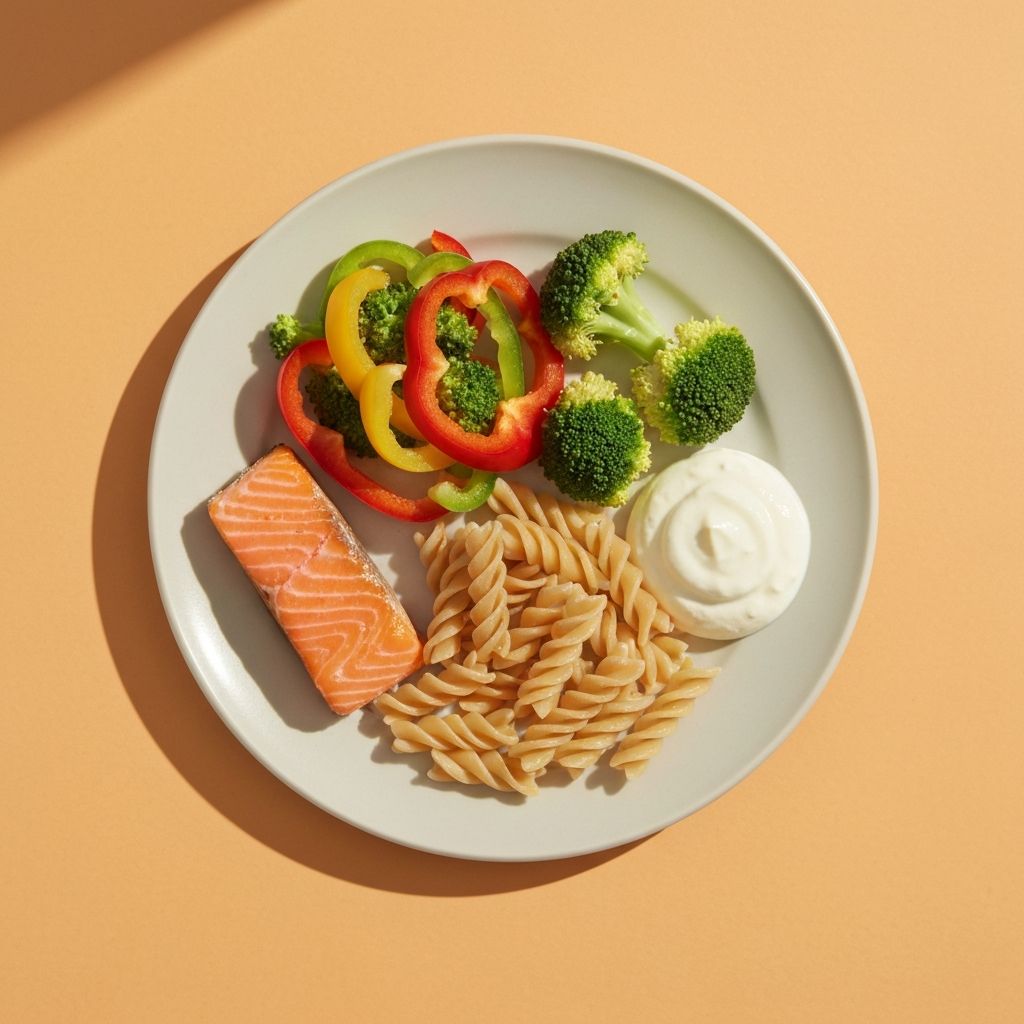
Visual perception of food composition—the proportions and variety of foods on a plate—influences eating experience and behavior. Research examining how awareness of plate composition relates to consumption patterns provides insights into sensory and cognitive factors in eating.
Visual Processing
The visual system analyzes food color, shape, arrangement, and proportion before and during eating. These visual cues activate taste expectations and influence flavor perception even before food is tasted. Observational research shows that plate presentation affects perceived portion size and satisfaction.
Variety on a plate—multiple food types, colors, and textures—can influence both appetite and perceived satiety. The "variety effect" demonstrates that greater diversity of foods available tends to promote increased intake in experimental settings.
Observational Data
Studies observing natural eating patterns have documented associations between food plate composition and intake volumes. These observations show correlations but do not establish causation—reduced awareness of composition may be associated with eating patterns, but does not necessarily cause them.
Longitudinal tracking of plate composition in everyday meals presents methodological challenges. Self-reporting of food composition is subject to recall bias, and laboratory assessments may not reflect natural eating environments.
Individual Differences
People vary in their attention to food presentation and composition. Some individuals naturally focus on visual aspects of food; others prioritize taste or convenience. These individual differences reflect broader personality and cognitive styles.
Research Limitations
Most research on plate composition and eating uses cross-sectional or observational designs, limiting causal inference. Experimental studies manipulating plate composition show modest effects on intake, with substantial individual variation in responses. The practical significance of these effects for real-world eating remains unclear.